

Sorry no search results for "{{searchterm}}"

HistoryIT Celebrates a Decade of Saving History

The innovative technology company continues to lead in digital archival preservation

PORTLAND, ME (February 10, 2021) — HistoryIT, a transformative technology and services company, is kicking off their ten-year anniversary celebration this month. The company has a decade long innovative focus on leveraging proprietary technology to quite literally save history by not only digitally preserving it, but by making it widely accessible to all.
 
HistoryIT’s work moves beyond traditional archival preservation, focusing instead on disrupting conventional beliefs that archival work is restricted to dusty collections of materials piled on shelves. Their technology and processes help key stories emerge from forgotten boxes and finds them a place in the lives of curious people or those who want to learn more about the heritage of an organization.
 
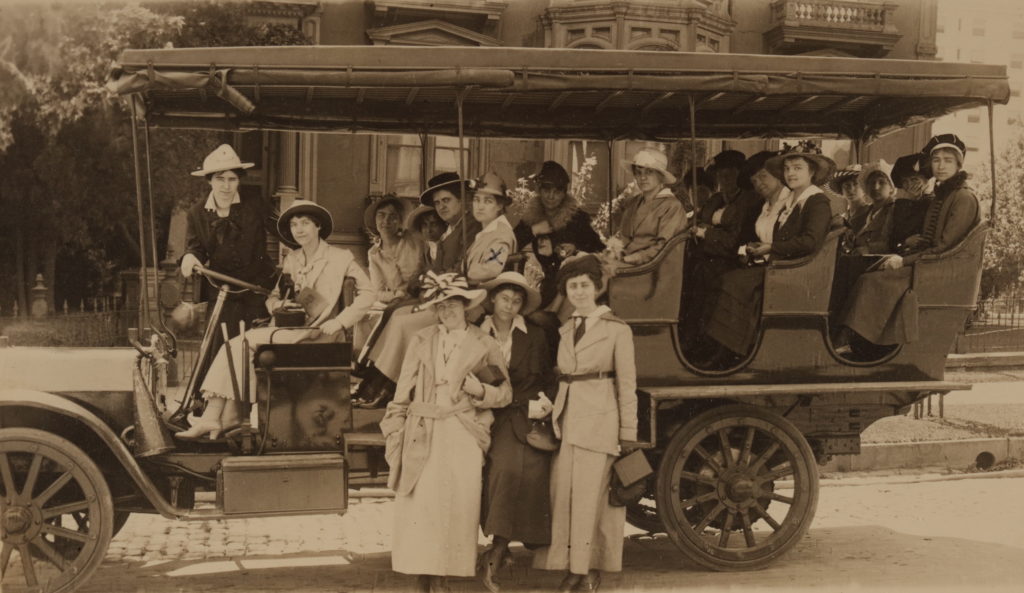
Beth Burkes, VP of Development and Philanthropy for Tri Delta women’s fraternity, offers this comment on HistoryIT’s inventive approach, “Far beyond scanning and saving, HistoryIT’s expertise in meticulous meta-tagging personalized to each organization means that we can conduct searches that provide a thorough review of our archives. If a researcher was looking in our archives for the history of women and travel, they would not only find our records of how we traveled, but also what we ate on the way, and the Executive Office memo that told members how to prepare. If a member was looking for how we have been “brave, bold and kind” since our founding, she would find it, because HistoryIT knows that those words are special to us and tagged them.”
 
A physical archive is limited by the need to be physically present. Most digital archives are unwieldy to search. HistoryIT’s innovative strategies include accommodations for both digital natives and those new to online historical materials. Tagging, intuitive organization, a focus on the user experience and social media integration expands the reach and ensures that history has a future.
 
From Jim Gates, former Library Director for the National Baseball Hall of Fame & Museum, “HistoryIT played a critical role in helping us move from multiple silos of collection data to one master database.  The complexity of this operation presented many challenges, and the HistoryIT staff was able to both explain the issues, but also to help resolve problems and define objectives.  The end result will be a digital system which allows us to present our collection to every baseball fan regardless of their ability to visit Cooperstown.”
 
The HistoryIT team has partnered with numerous clients who are focused on unique ways to enrich their archival presentations, spotlight precious artifacts and tell the larger historical story of their organizations and communities in a compelling and accessible way. Their clients and partners range from the personal archives of well-known public figures, to cultural institutions and corporations, to fraternal and religious organizations, to national non-profit organizations and iconic national treasures, including the fabled Baseball Hall of Fame in Cooperstown, NY.
 
For a full listing of the groundbreaking digital archival services and products that HistoryIT has developed over the past decade, please visit HistoryIT’s services and software pages.

HistoryIT Past Masters: Ten Years of Saving History

Past Masters is HistoryIT’s new vlog series created to offer a more visual and personal account of our history saving journeys. From the beginning, we wanted HistoryIT to be an organization that helped bridge the gap between past and present, by telling not just facts, but stories. Through our digital museums, we’ve been able to tap into the emotions of history, uncovering hidden moments that make for compelling narratives. Join us throughout the year for our behind-the-scenes look into historical preservation.

Continue reading “HistoryIT Past Masters: Ten Years of Saving History”

Alpha Chi Omega Partners with HistoryIT

Digitally preserving 134+ years of history

Indianapolis, October 25, 2019 — Alpha Chi Omega Fraternity today debuted the first phase of a project to digitally preserve and share its vibrant history, one that spans more than a century and reflects broad trends in campus, women’s and national history.

Through a partnership with digital history pioneer HistoryIT, Alpha Chi Omega has a multi-phase plan to transform its photographs, documents, memorabilia, scrapbooks, jewelry and more into a fully searchable digital collection that will tell the story of the organization dating back to its founding in 1885. At the time of founding, Alpha Chi Omega was the only fraternal organization for women studying music.

The first phase of Alpha Chi Omega’s digital collection site is now available online for members, alumnae and the general public to enjoy by visiting alphachiomega.historyit.com. Learn about Alpha Chi Omega’s long history of altruism, from supporting orphans during WWI to its current efforts focused on domestic violence awareness. Or check out how chapters, houses, conventions and fashions have changed through the decades with the Then and Now feature.

“Capturing our history and making it available to all members is a priority of the Fraternity,” said Katie Lampinen Gaffin, chief executive officer of Alpha Chi Omega. “We are now able to offer all members the opportunity to form a deeper connection through untold stories, and maybe find a story of their own.”

Alpha Chi Omega is among the first Greek-letter organizations to work toward preserving its extensive archives in its entirety for future generations while also using archival resources in innovative ways to support work with members and alumnae. As more historical materials are added to the digital collection site, visitors to the digital archives will be able to explore additional entries in the interactive timeline, digital exhibits, expanded Then and Now comparisons, education modules, profiles of prominent Alpha Chis and other interactive experiences.

“The prospect of digitally preserving more than 200 linear feet of archival holdings is a daunting one for any organization,” said Kristen Gwinn-Becker, PhD, HistoryIT’s chief executive officer. “Yet, if we do not undertake this effort, this history could be lost forever. It’s a great pleasure to work with partners like Alpha Chi Omega who recognize the urgency and the value of preserving and sharing their heritage.”

Through a strategic plan to transform physical archives into a digital collection, every item will be tagged with subjects, names, events and more. Alpha Chi Omega’s online digital collection was developed to showcase the rich history of this organization that has supported the development of more than 275,000 real, strong women for nearly 135 years. In addition to presenting archives in an accessible way, HistoryIT provides its clients with high-resolution archival images, which are stored on secure servers to ensure that historical collections are protected in the event that physical assets are destroyed due to aging, fire or some other disaster.

“Our hope, through this website, is to give members the freedom and ability to make Alpha Chi Omega’s history come to life through an easy and fun connection,” said Gaffin. “Discover something new every day!”

About Alpha Chi Omega:

Founded more than 130 years ago on the campus of DePauw University, Alpha Chi Omega has been a leader in redefining what it means to be a sorority. Through strength in sisterhood and a commitment to the values we share, generations of real, strong Alpha Chi Omega women have become leaders who effect change on our campuses, in our communities and around the world. Visit alphachiomega.org to learn more.

About HistoryIT:

Digital history leader HistoryIT provides services, software and hardware solutions that help organizations transform their archival materials into 21st-century digital collections. Archives previously locked away become engaging online portals that can be easily explored by scholars and the general public alike. Clients are entities that have prioritized gaining and sharing better access to their heritage, and include numerous Greek-letter organizations, several Junior Leagues, the National Baseball Hall of Fame and Museum, the Historical Society of Washington, D.C., the Great American Songbook Foundation, and the Osher Map Library and Smith Center for Cartographic Studies.

History Shows Attack on Greek Life Nothing New

With Harvard and other leading universities seeking to ban or effectively eliminate single-gender organizations by sanctioning their members, sororities and fraternities are under attack.

It’s not the first time.

Continue reading “History Shows Attack on Greek Life Nothing New”

Kappa Kappa Gamma Partners with HistoryIT

Becoming first Greek-letter organization to commit to transforming its vast archives into a 21st-century digital collection

Columbus, OH, November 10, 2017 – Kappa Kappa Gamma Fraternity and its Foundation today announced it has embarked on a ground-breaking project to build a comprehensive digital collection that showcases its vibrant history in the context of the women’s movement.

Through a partnership with digital history pioneer HistoryIT, Kappa is transforming its memorabilia, documents, scrapbooks, photographs and more into a fully searchable digital collection that will tell the story of the organization dating back to its founding in 1870.

“As we prepare for the next chapter of Kappa’s history, it’s important to capture the stories of our past,” said Beth Burkes, Kappa Kappa Gamma Foundation Executive Director. “Partnering with a cutting-edge digital history company will enable our members to have the entirety of Kappa’s history, including the local chapter narrative, available at their fingertips by our Sesquicentennial in 2020.”

Kappa is the first Greek-letter organization to commit to preserving its extensive archives in its entirety for future generations while also using archival resources in innovative ways to support work with members and alumnae. Plans for this project also call for digital exhibits, education modules, and interactive experiences.

“In Kappa, we found a forward-looking organization eager to preserve its history, both as a way of engaging its members and as a way of sharing the myriad ways in which it has long supported the social and intellectual growth of women,” said Kristen Gwinn-Becker, HistoryIT chief executive officer. “It’s a great pleasure to work with partners who recognize the value of their heritage.”

In addition to presenting archives in an accessible way, HistoryIT provides its clients with high-resolution images stored on digital files to ensure that historical collections are secure in the event physical assets are destroyed due to aging, fire or some other disaster.

“There are thousands of stories buried in Kappa’s archival collection that we don’t want to lose,” Burkes continued. “Such as the story of member Mareta Nelle West, the geologist who selected the landing site for Apollo 11 and other manned missions to the moon. Or of member Jane Emig Ford, who at 105 pounds and five feet tall signed up immediately after graduation to serve with the Red Cross during World War II and drove the first Red Cross clubmobile over the Burma Road. Once the digital archive of Kappa is complete, these stories will come to life on screen in a whole new way. It is truly an exciting project to embark upon.”


About Kappa Kappa Gamma:

For 147 years, Kappa Kappa Gamma has provided leadership opportunities, educational programs, and, most importantly, the unwavering support of loyal sisters to help members cross the bridge from dreams to reality. With 141 active chapters in the U.S. and Canada, more than 250 alumnae associations around the world, and more than 280,500 initiated members since its founding, Kappa empowers women to pursue a lifetime of excellence. The Kappa Kappa Gamma Foundation delivers educational and leadership training, preserves the Fraternity’s heritage, provides scholarships, and offers financial assistance to members in need. For more information about the Fraternity or its Foundation, visit www.kappa.org.  

About HistoryIT:

Digital history leader HistoryIT helps transform archives into engaging websites that are easily accessed by scholars and the general public alike. The company’s team of historians and technologists partners with organizations of all types and sizes to develop and implement strategic plans that leverage historical collections. Clients include the National Baseball Hall of Fame, the Salt Institute for Documentary Studies and the Historical Society of Washington, D.C.

Contact: [email protected]207-699-4222

National Fraternity Partners with HistoryIT to Build Digital Legacy

Sigma Alpha Epsilon begins bold initiative to share their entire archive online

Evanston, IL, May 24, 2017 – Sigma Alpha Epsilon has launched the first phase of an ambitious project to ensure that their 161-year-old history is preserved for future generations.

Sigma Alpha Epsilon Digital Legacy is the result of a collaboration between Sigma Alpha Epsilon’s National Foundation and HistoryIT. The site created for the Fraternity showcases several hundred of the more than four million images, documents and artifacts collected since the Fraternity was founded in 1856.

The Fraternity plans to continue expanding the digital collection site by adding more content from its archival holdings — materials ranging from its 19th-century founding during the Civil War to photographs of SAEs serving during World War I, drawings by Louis Tiffany to a portrait of SAE and U.S. President William McKinley — each of these images paint a vivid picture of an organization whose history often reflects that of the United States over the past century and a half.

“Telling our story from the past, present and long into the future, through the eyes of our men, connects us more deeply,” says Sigma Alpha Epsilon Foundation President and CEO Will Grimsley. “This continuum will serve to enable significant results in member education, recruitment of the best young men, sustained commitment of our alumni and scholarly research.”

A team from HistoryIT assessed the Fraternity’s vast archival holdings, most of which were located in the attic of the Levere Memorial Temple, since many of them were beginning to deteriorate.

“It was a pleasure working with the team at the headquarters, whose forward-thinking leadership recognizes the importance of preserving historical collections so that they can serve as the evidence for our stories about the past,” says History IT Founder and CEO Kristen Gwinn-Becker, PhD. “Without this commitment to digital stewardship, countless records of the Fraternity’s — and nation’s — past would be lost.”

Parts of the beta digital collection site are available to the public, while other portions are accessible to members only. Highlights of the site’s first phase include digitized photographs, scrapbooks and publications, as well as a timeline that traces U.S. and Sigma Alpha Epsilon history, and an interactive exhibit that includes photographs and letters from World War I. The Foundation has embarked on a fundraising campaign to finance the digitization of the remainder of the collection.

Digital Scrapbook Shines New Spotlight on the Great Bambino

HistoryIT releases a new digital exhibit that showcases Babe Ruth as a vaudeville performer

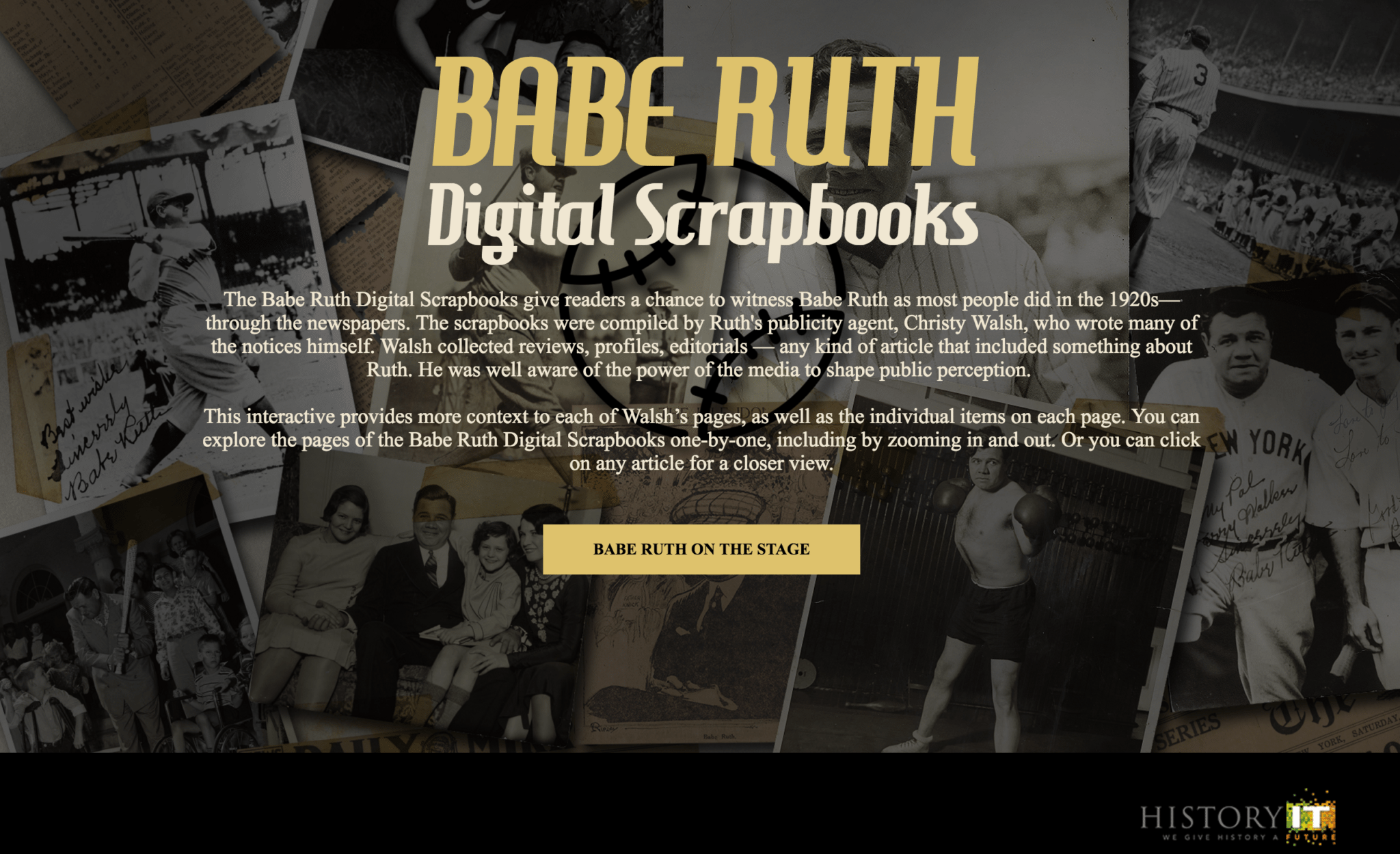
Portland, Maine, September 15, 2016 – In partnership with the National Baseball Hall of Fame and Museum, digital history pioneer HistoryIT today launched an interactive exhibit of the first of Babe Ruth’s twenty-five scrapbooks. The scrapbooks are part of the Museum’s groundbreaking digital collection, which launched last week at collection.baseballhall.org and will continue to be updated.

The Babe Ruth scrapbooks contain clippings and photos saved by Ruth’s manager, Christy Walsh. In addition to news articles about the legendary baseball player’s accomplishments on the diamond, the scrapbook showcased in this exhibit also contains records of Ruth’s career as a vaudeville actor and promoter of commercial products. It acknowledges triumphs as well as defeats: Walsh included clippings about Ruth and other players who were punished for violating a rule prohibiting barnstorming.

HistoryIT’s digital presentation, available at baberuth.baseballhall.org, allows site visitors to explore each page by zooming in and out or clicking on any individual article for a closer view. Additionally, it provides short essays and contextual explanations for each page, as well as every item on the page. It is built on HistoryIT’s Digital Platform Environment with integrated Klixel8 technology, which enables virtual visitors to navigate among activated image elements on each page. Viewers are invited to delve deeper into the stories and look for tagged subjects to discover the connections within this wealth of information. From this interactive exhibit, visitors can also navigate to view the 24 other scrapbook volumes at collection.baseballhall.org.

“Digitizing for preservation and access is only the first step for a digital collection,” said Donny Lowe, the Museum’s Director of Digital Strategy. “This digital interactive is a great example of how cultural institutions can leverage a digital collection to create meaningful and immersive stories.”

“We are thrilled to work with the Hall of Fame to demonstrate how digital historical content can be utilized in a variety of settings to deepen engagement and understanding,” said HistoryIT CEO Dr. Kristen Gwinn-Becker, whose company works with a wide range of organizations committed to preserving and sharing their histories, from professional sports teams to museums and universities. “We believe that historic treasures like these should be available to anyone, not just scholars,” she continued. “We’re happy to be able to provide the technological tools and content expertise to make history accessible and engaging. The Digital Babe Ruth Scrapbooks are a wonderful illustration of that.”

About HistoryIT:

HistoryIT, Inc., a privately held international company based in Portland, Maine, provides clients with a new approach to making historical collections more accessible, discoverable and profitable. Owned and managed by professional historians and digital strategists, the innovative company brings industry-leading expertise to preserve historical collections of all types and sizes and to make them searchable in meaningful ways. Working with cultural institutions, universities, corporations, professional associations, sports teams, and others, HistoryIT leverages cutting-edge technologies and proprietary methodologies to create appealing, effective digital portals for historical resources.

HistoryIT Partners with Leading Map Library to Launch Cutting-Edge Digital Collection

HistoryIT and the Osher Map Library lead way in making digital map collections accessible to a broad audience

Portland, ME, April 10, 2017 – Digital history company HistoryIT and the Osher Map Library and Smith Center for Cartographic Education (OML) at the University of Southern Maine today unveiled a new website designed to make the map library’s world-renowned collection accessible to a vast and still-untapped online audience.

The new website launch comes after a yearlong collaboration in which HistoryIT and OML transformed the library’s decade-old website into a new digital collection site that rejects an antiquated approach to digital libraries, focusing more on user experience and discoverability. This shift in direction has moved OML’s digital interface from a simple online catalog that mainly served dedicated researchers to a robust digital collection that engages diverse public audiences. The more robust and searchable digital collection is housed in HistoryIT’s software, which delivers better interconnectivity with the digital materials.

“OML’s forward-thinking leadership recognized that 21st century digital collections must consist of more than scans and digital photographs connected to a rigid structure of metadata, the descriptive information that connects online searches with meaningful results,” said HistoryIT CEO Kristen Gwinn-Becker, PhD.

A modern digital collection does much more than hold scanned materials, Gwinn-Becker said. It also makes them organized, discoverable, and navigable through a system of smart tags associated with each item. This more sophisticated process also involves creating new types of consistent metadata for individual items in order to understand the web of relationships among diverse and formerly disparate materials.

HistoryIT created cutting edge enhanced metadata for a representative sample of 1,000 of the OML’s more than 1.5 million items. HistoryIT and OML will continue to expand the accessibility of the collection over the next few years, as part of OML’s ongoing digitization efforts.

“It was clear to us that when done correctly, a comprehensive 21st century digital collection would open the door to an extraordinary range of benefits for OML,” said Ian Fowler, OML’s director. “This new approach to digital collections is the key to achieving our mission of making cartographic heritage widely accessible, not only to the university, but to all of the people of Maine and students, scholars, and the generally curious throughout the world.”

“The history of cartography is so rich and detailed and this new process with HistoryIT was the only way we could replicate online the lessons we teach in person with the depth and attention a collection of this caliber deserves,” he said.

Fowler pointed to Robert Sayer’s 1755 map of the English empire in North America, commonly referred to as the Anti-Gallican map, as an example of how HistoryIT and OML are making the site more accessible. While the previous OML website made this map searchable by title and map creator, the new website allows users to discover this map through 23 newly created tags, including each of the seven inset maps on the parent map and five new subject tags that go beyond the academic language of traditional subject headings. HistoryIT also took the unprecedented step of individually cataloging the map cartouche, imagery and insets. Now, a map that is populated with numerous sea monsters, such as Jan Jansson’s 1652 map America noviter delineata, will have an associated record for each of the creatures.

“This project is so much more than a website redesign – it demonstrates how to make digital heritage materials accessible to the general public, not just scholars,” Gwinn-Becker said.

About the Osher Map Library

The Osher Map Library and Smith Center for Cartographic Education at the University of Southern Maine is one of the premier map libraries in the United States. The scope of the collection covers the history of cartography, as well as the founding and exploration of America and New England. This collection consists of over 1.5 million cartographic objects, dating from 1475 to the present. The libraries collections are anchored by the founding gifts from Dr. Harold and Peggy Osher in 1989 and Eleanor Houston Smith in 1986.  The Osher Map Library’s historic globe collection is considered to be one of the most important in the United States both for its historical and scientific value. It is the second largest, publicly accessible globe collection in the United States, after that of the Library of Congress.

Her Hat Was In the Ring!

New website created and hosted by HistoryIT features thousands of American women who ran for office before they had the right to vote nationally in 1920

Portland, Maine, August 1, 2016 – Hillary Clinton made history last week by becoming the first woman nominated by a major U.S. political party to run for president. But more than a century ago – before the Nineteenth Amendment promised men and women equal voting rights in 1920 – thousands of women ran for political offices ranging from school boards to the U.S. presidency.

Her Hat Was In The Ring!, a project created by three women scholars, includes information about 3,352 – and counting – women who waged campaigns across the U.S. in the second half of the nineteenth and early twentieth centuries. An updated version of the website was launched today.

“Given the historical moment we witnessed with Hillary Clinton’s nomination, we felt it was a perfect time to remember the trailblazers who came long before her,” said Kristen Gwinn-Becker, a historian and CEO of HistoryIT, the digital history company that created and hosts Her Hat Was In The Ring!

The new site allows visitors to search easily for and share information about women candidates who ran for office. It includes short biographies of women like Victoria Woodhull, a newspaper publisher who ran for president in 1872, and Olive Rose, who, according to the website, became the first woman elected to a U.S. political office when male Maine voters chose her as a County Register of Deeds in 1853.

“Most historians – even most scholars of women’s history – don’t know about these women,” said Wendy E. Chmielewski, Curator of the Swarthmore College Peace Collection and a co-founder of the project. “Access to political office is a significant marker of citizenship rights for women.”

Chmielewski and Jill Norgren, professor emerita at John Jay College, CUNY, joined forces almost a decade ago to find all American women who ran for local, state and national offices before the Nineteenth Amendment guaranteed women the right to vote. When they came up with the idea for the project, Hillary Clinton was beginning her primary campaign for president in 2007. “We asked ourselves, How many women ran for office before universal suffrage?” Norgren said. “We thought there’d be fewer than 100.”

Since then, more than 3,000 biographies of women who ran in over 5,000 campaigns, have been added to the site – and more are added regularly.

“Every day we learn about more women who were elected to office when the United States was still a young country,” Gwinn-Becker said. “Digitized primary sources are revealing that women always have been involved in the political process and we hope that projects like ours will be an inspiration for girls and women who aspire to political office.”

About HistoryIT:

HistoryIT, Inc., a privately held international company based in Portland, Maine, provides clients with a new approach to making historical collections more accessible, discoverable and profitable. Owned and managed by professional historians and digital strategists, the innovative company brings industry-leading expertise to preserve historical collections of all types and sizes and to make them searchable in meaningful ways. Working with cultural institutions, universities, corporations, professional associations, sports teams, and others, HistoryIT leverages cutting-edge technologies and proprietary methodologies to create appealing, effective digital portals for historical resources.

Baseball Hall of Fame & Museum Goes Digital

HistoryIT partners with the museum to launch digital collection containing Babe Ruth’s scrapbooks and more to be added

HistoryIT helps National Baseball Hall of Fame and Museum make baseball treasures available to the world

Portland, Maine and Cooperstown, New York, September 7, 2016 – For decades, Babe Ruth’s scrapbooks have been stored in an archive at the National Baseball Hall of Fame and Museum, available only to researchers who made special arrangements to view them in Cooperstown, New York. That changed today with the launch of digital versions of the scrapbooks, compiled by the legendary baseball player’s manager almost a century ago.

The release of the scrapbooks culminates a yearlong collaboration between innovative history company HistoryIT and the Hall of Fame. HistoryIT, which helps organizations make their historical collections more accessible, used their cutting-edge methodology to preserve digitally the museum’s vast collection in such a way that makes it far more accessible than simple scanning.

HistoryIT partnered with the Hall of Fame to create a strategic plan that will help guide the Hall of Fame as it evolves the way its collection, collection.baseballhall.org, is accessed. The company also created an interactive exhibit showcasing the first scrapbook, which will be released on September 14. In the coming months, rare photos of Jackie Robinson and letters written by Ty Cobb, among numerous other things, will be added to the site.

“As a nonprofit committed to preserving baseball’s history, we wanted to build a 21st century digital collection so fans can be a part of baseball’s history no matter where they are,” said Donny Lowe, the Museum’s director of digital strategy. “We partnered with HistoryIT to develop a forward-looking plan enabling us to share our content with anyone in the world.”

The project began in September of 2015, when HistoryIT sent a team of historians and digital strategists to Cooperstown to evaluate the entirety of the Hall’s museum, library and archival holdings in order to create a plan to tag materials – ranging from Babe Ruth’s baseball bat to Negro League historian Robert Peterson’s papers – in a way that would allow the general public to peruse them. Led by HistoryIT founder and CEO Dr. Kristen Gwinn-Becker, the team spent 12 months meticulously digitizing, describing and tagging the first selection of materials to ensure that the museum’s digital assets are carefully curated and searchable.

“It was a privilege to work with a storied institution that values history and recognizes the importance of using technology to save that history for future generations,” Gwinn-Becker said. “We believe that these materials are just as valuable to the general public as to the scholar and are delighted to have the opportunity to create something that so dramatically broadens the reach of the Hall of Fame’s extraordinary collection.”

Totaling 25 volumes and more than 1,400 pages, the scrapbooks are filled with letters, newspapers clippings and photos from Ruth’s illustrious career on the field, as well as his work on the stage, television, and as an endorser of numerous products. While he is best known for his 22 seasons in Major League Baseball, Ruth was an accomplished Vaudeville actor who toured extensively, as depicted in much of the first volume of the scrapbooks. From 1921 to 1935, Ruth’s manager, Christy Walsh, pasted into leather-bound books myriad items he found noteworthy, including reviews of Ruth’s theatrical performances.

The pages in each scrapbook were encased in Mylar in 2001, extending the life of the physical books. They have never been on public display. Fifteen years later, they’ve been preserved for a digital age that has none of the physical restraints of a bricks and mortar museum. Anyone with computer access can go through them, page by page.

“Our goal is to share baseball’s rich history with as large an audience as possible, by making these historic treasures available online, the Museum can engage with fans and researchers around the globe” said Ken Meifert, the Museum’s vice president of sponsorship and development.

About HistoryIT:

HistoryIT, Inc., a privately held international company based in Portland, Maine, provides clients with a new approach to making historical collections more accessible, discoverable and profitable. Owned and managed by professional historians and digital strategists, the innovative company brings industry-leading expertise to preserve historical collections of all types and sizes and to make them searchable in meaningful ways. Working with cultural institutions, universities, corporations, professional associations, sports teams, and others, HistoryIT leverages cutting-edge technologies and proprietary methodologies to create appealing, effective digital portals for historical resources.