

How Tri Delta Digitally Preserved Its Legacy to Strengthen Engagement
In an era when storytelling drives engagement and digital presence is everything, historical preservation might not be top of mind for nonprofit professionals. But for Tri Delta, its legacy held the key to modern engagement strategies.
130 years after its founding, Tri Delta found itself sitting on a treasure trove of valuable historical materials. Their archive of photos, letters, memorabilia and recordings tells the story of the organization’s impact on generations. However, these precious resources remained largely inaccessible, locked away in physical storage and underutilized.
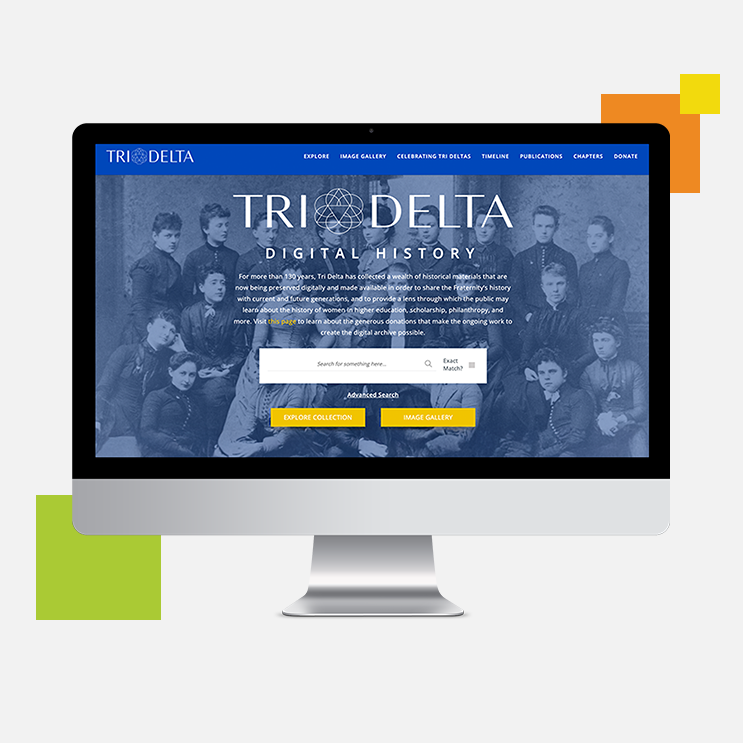
In 2020, Tri Delta embarked on a transformative partnership with HistoryIT not just to digitally preserve their archives but to do so in a way that created a searchable, accessible database that would enhance every aspect of the organization’s work — from fundraising and communications to member engagement and strategic planning.
Through this partnership, Tri Delta has demonstrated how nonprofits can leverage their historical assets to create deeper connections and drive organizational success.
Table of Contents
- The Challenge: Archival Access and Operational Bottlenecks
- The Solution: Partnering with HistoryIT for Digital Preservation
- Impact on Fundraising
- Impact on Communications
- Enhanced Trainings & Meetings
- Long-Term Benefits and Future Potential
The Challenge: Archival Access and Operational Bottlenecks
Before partnering with HistoryIT, Tri Delta not only saw their archival materials as being in great risk of deterioration and loss, but they faced significant challenges in utilizing their extensive historical collections.
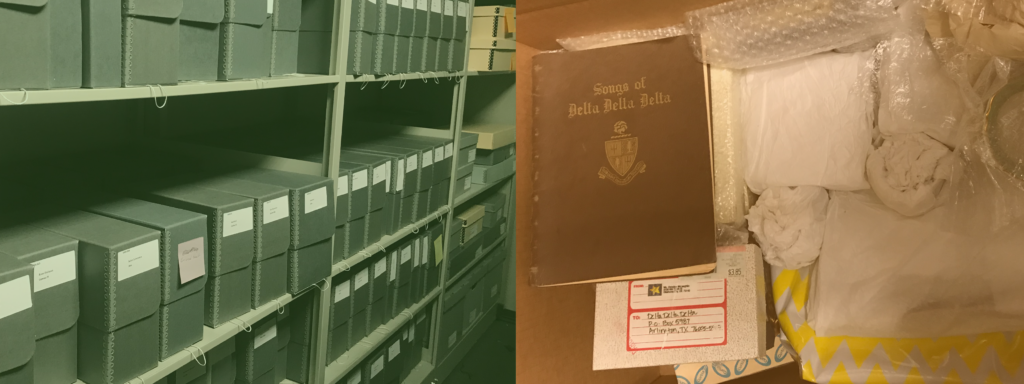
The process to access historical materials was cumbersome and inefficient:
- Staff members had to know exactly what they were looking for in the archives.
- They would submit requests to the single archivist on staff.
- Once located, fragile materials would need to be scanned as one-off items.
This inefficient system prevented team members from using archival materials to enhance their work and reach their full potential.
Additionally, the nearly 250,000 living members simply could not all visit the archives to connect with the history of the organization.
The Solution: Partnering with HistoryIT for Digital Preservation
Tri Delta partnered with HistoryIT for its strategic approach to digital preservation. This five-year project was designed to fully digitize their archives and create a searchable, accessible digital repository that could serve every aspect of the organization and would be stable as technology evolves.
The scope of the project included:
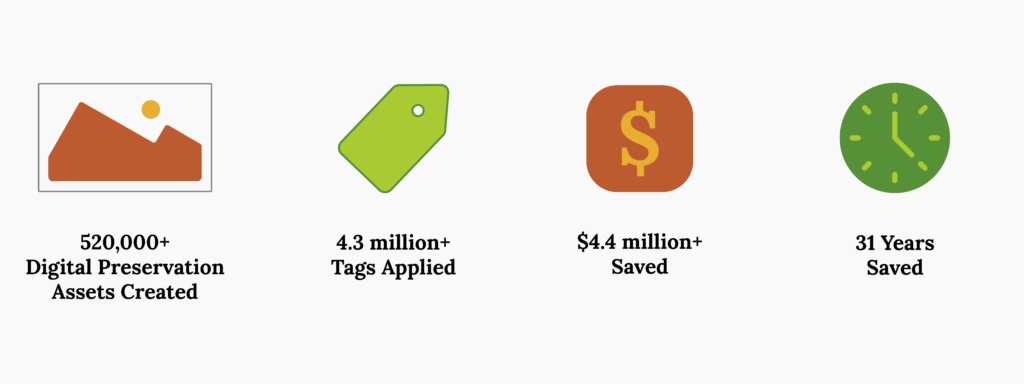
- 520,000+ digital preservation assets created, future-proofing their history
- 4.3 million+ metadata tags applied, enabling precise searching and discovery
- $4.4 million+ saved, compared to undertaking in-house digitization
- 31 years saved, compared to undertaking in-house digitization with single staff member
Most importantly, the solution opened access to the archive, transforming it into a dynamic tool for every layer of the organization.
“Thanks to History IT’s detailed tagging, searches can now turn up surprising and unexpected new finds,” noted Beth Applebaum, Tri Delta’s Archivist.
As a result, departments across Tri Delta have fundamentally changed how they approach their work.
“It has been such an honor to digitally preserve the legacy of an organization that uses their history to not just celebrate achievements, but to influence their future,” says Kristen Gwinn-Becker, HistoryIT’s Founder & CEO. “The team at Tri Delta truly understands how their shared past creates a sense of belonging and can inspire generations of young women to create change for the better.”
Impact on Fundraising
The digital archive has had a profound impact on Tri Delta’s fundraising operations, particularly in the critical areas of donor cultivation, personalized stewardship and retention.
Prior to meetings, the development team can now quickly locate content that resonates personally with prospective donors, reminding them of the impact the organization has had before starting a conversation. They can also easily share links to relevant materials in follow up emails or stewardship conversations.
“Now that a significant amount of our history has been digitized, the stories are coming to life in ways we never even anticipated,” explains Beth Burkes, Tri Delta’s Chief Development Officer. “These stories are deeply meaningful to our donors and potential donors.”
When the average donor requires seven touchpoints and major gifts need 12–24+, it’s essential to make each interaction unique and meaningful. Tri Delta is doing just that with a tool that applies to every giving need — programs, scholarships, unrestricted funds and more.
Innovative Donor Cultivation
The team now uses archival content as a powerful “door opener” with potential donors.
“When you have the opportunity to touch on personal connections, especially showing a major donor a photo of herself when she was younger, that’s a win,” notes Burkes.
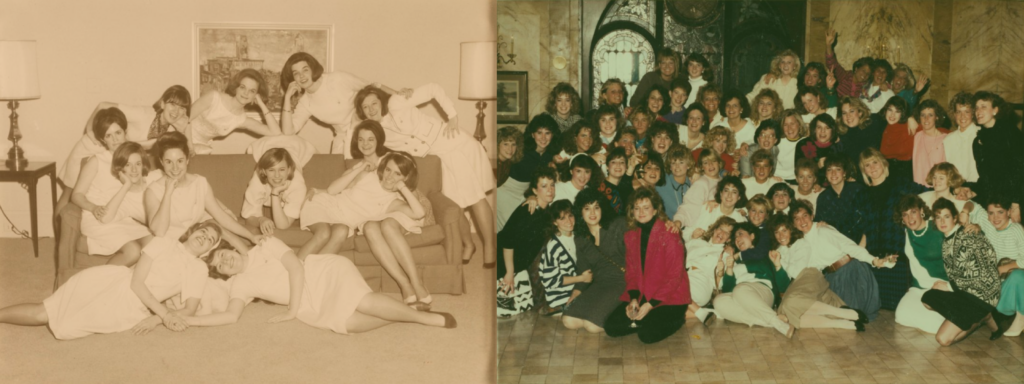
This personalized approach is already yielding results:
- In one successful solicitation, the team shared links to music-related materials from the digital archive with a donor known to love music. This personalized outreach sparked the donor’s interest, ultimately leading to funding for the digital preservation of the remaining items in the music collection.
- The team secured a meeting with the executive director of a Tri Delta member’s foundation. After learning of the member’s specific interest in supporting her chapter, the digital archive provided a pathway to present a highly personalized giving opportunity focused on that chapter’s preservation.
- In a campaign reaching out to past recipients of the Sarah Ida Shaw Award, the highest honor bestowed on a collegiate member, the team shared a letter from the archive that moved a member to tears as she recalled the impact Tri Delta had on her life. She has since become a donor and a volunteer.
- The team also regularly utilizes the digital archive to easily search for and share photos from potential donors’ collegiate years to aid in securing visits to discuss giving opportunities.
With capacity for major gifts identified at $169 million among their top 250 potential donors, the development team’s first stop — the digital archive.
Donor Retention Strategies
The impact of personalized donor stewardship on donor retention and giving cannot be overstated:
- Retaining existing donors is five times more cost-effective than acquiring new ones.
- Organizations implementing personalized stewardship strategies saw major donor retention increase from 62% to 83% over two years.
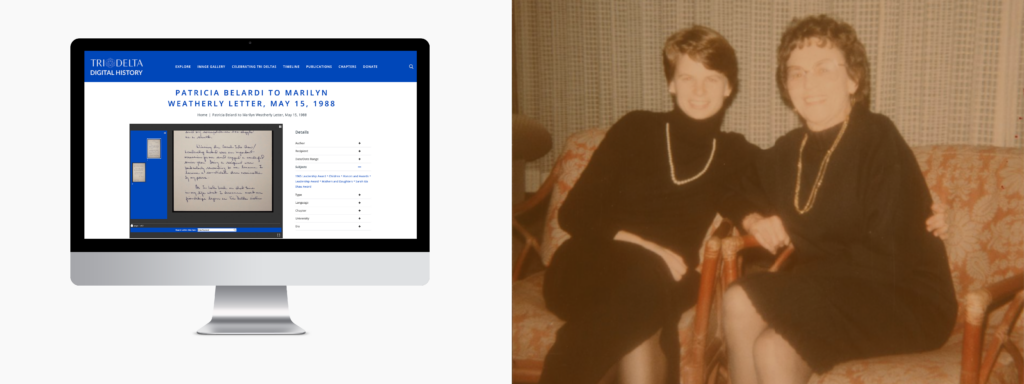
The digital archive has allowed Tri Delta to elevate their stewardship practices with meaningful, personalized communications:
- In the Sarah Ida Shaw Award recipient campaign, the team shared a link to a letter a recipient had written to Tri Delta. The woman replied, “To me the archive of that single letter from me in 1988 is enough to show the potential power of the project you are doing.” In that same interaction, the member was reconnected with an image of her and her mother, a copy of which had been donated to the organization, but the original lost.
- When offering condolences to a member whose mother (also an alumna) had passed away, Tri Delta staff included a link to a photo showing the member’s mother in the front row of a Tri Delta event — the type of photo she might not have had in her personal collection.
This unique approach has incomparable potential to build and sustain donor relationships.
Impact on Communications
The digital archive has transformed Tri Delta’s approach to communications and member engagement, providing rich content for storytelling that resonates deeply.
The power of storytelling in nonprofit communications is well-documented:
- 65% of people are more likely to engage with nonprofits that use stories that evoke emotions.
- Nonprofits using storytelling to promote their causes achieve 25% higher engagement rates compared to traditional methods.
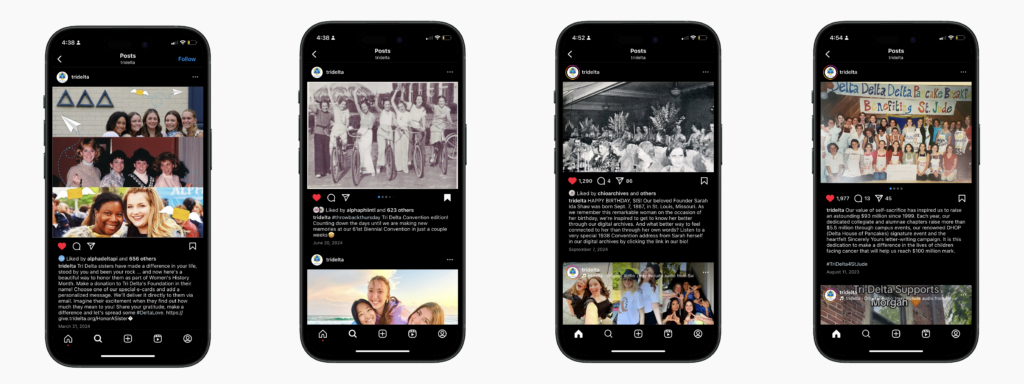
Through easy access to historical content, the Tri Delta team is able to more efficiently and consistently share highly-sought after stories.
“When we develop content that focuses on the history of Tri Delta and incorporates materials from our digital archive, we consistently see it outperform in terms of engagement,” shares Brandy Darrow, Tri Delta’s Senior Director of Marketing and Creative. “Whether it’s shared on our blog, social or in an email, it gets the most clicks.”
The marketing team now incorporates materials from the digital archive across multiple channels:
- The Trident Magazine: They can easily pull digital assets of historical materials to enhance feature stories, like their in-depth article on Sarah Ida Shaw Award recipients.
- Blog Content: The team has expanded their popular “Historically Speaking” and “From the Archives” series, which are the most requested articles. They can highlight both light-hearted stories about hatpins and dance cards and significant historical moments, such as when Diane Peterson became the first woman of color to join Tri Delta.
- Social Media: Archival materials power engaging throwback posts, event promotions and calls for donations.
- Podcast: For their “Let’s Talk Tri Delta” podcast, they use archival materials as primer for meetings with alumnae before recording, helping interviewees reconnect with their Tri Delta experience.
For each piece of content, they link to specific searches in the digital archive, encouraging members to explore and deepen their engagement.
Enhanced Trainings & Meetings
The impact of the digital archive extends well beyond fundraising and communications, touching nearly every aspect of Tri Delta’s operations.
- House Directors Trainings
Tri Delta’s Housing team used the digital archive to enhance training and motivation for house directors — a role that can sometimes be unglamorous but is crucial. By sharing historical job descriptions and quotes about house directors and their impact on young women’s lives, they provided inspiration for these important staff members. - New Member Education
The organization’s Pearl to Pine program leverages the digital archive for new member education, building connection and understanding of the organization from the earliest stages of membership. This foundational engagement with Tri Delta’s history will lead to lifelong involvement — and possibly future donors. - In-Person Event Integration
The digital archive has become an integral part of Tri Delta’s event planning:
- At Tri Delta’s Convention, interactive kiosks allow members to explore the digital archive on site.
- For DDD B&B events, QR codes linking to the digital archive serve as organic ice breakers, facilitating intergenerational connections.
- When making speaking engagement requests, the marketing team pulls archival materials to start conversations and excite potential speakers about the opportunity.
- Board Relations
One particularly powerful example of the archive’s impact came during a joint meeting of Tri Delta’s three boards. The team located and played a recording of Founder Sarah Ida Shaw speaking at the 50th anniversary celebration, with her concluding words: “I am passing the torch undimmed to you for you to lead this organization forward.”
This recording — previously a degrading magnetic tape but now securely preserved in the digital archive — set the perfect tone for their strategic planning discussions.
Long-Term Benefits and Future Potential
Tri Delta’s partnership with HistoryIT has transformed a static, underutilized archive into a dynamic, accessible digital resource that enhances nearly every aspect of the organization’s operations. As they approach the conclusion of their five-year digitization project, they are well-positioned to leverage their digital archive for continued growth and impact.
As Beth Burkes of Tri Delta observed, the stories preserved in their archive are “the ties that bind us all together.” By making those stories accessible and usable, Tri Delta has transformed their history from a passive collection into an active force for organizational success.
Next Steps: Save Your History
If you’ve made it this far, you’re probably keen to discover creative ways to engage donors and connect with your members. History plays a vital role in communicating your organization’s legacy and future. It’s how you communicate impact, demonstrate value and develop strategic plans for what’s to come.
Get in touch to learn more about how HistoryIT can help to save your history and give your team the tools they need to put your history to use.


