Sorry no search results for "{{searchterm}}"

A Woman for President: 144 Years and Counting

Candidate Hillary Clinton stands on the shoulders of thousands of women who have run for political office since the nineteenth century. Newspaper publisher Victoria Woodhull ran for president of the United States in 1872. Twelve years later, attorney Belva Lockwood announced as the presidential candidate of the small Equal Rights Party. Unlike Woodhull, she ran a full campaign for the office with electors pledged to her and votes tallied.

Continue reading “A Woman for President: 144 Years and Counting”

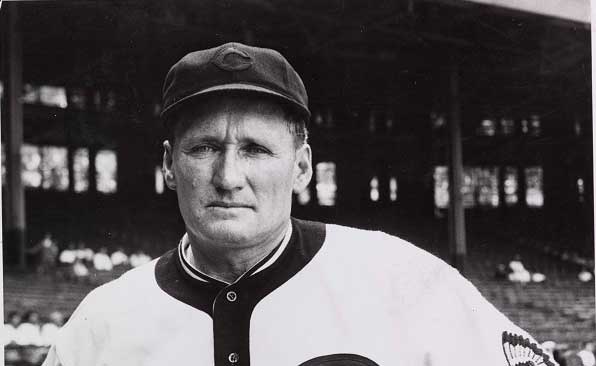
Walter Johnson, Manager of the Cleveland Indians

As most baseball fans know, the Cleveland Indians are battling right now for their first World Series title since 1948.

That 1948 team was stacked with future Hall of Famers:  Larry Doby, Bob Feller, Lou Boudreau, Bob Lemon, Joe Gordon and Satchel Paige. But one Hall of Famer who wore the Cleveland Indians uniform in the first half of the 20th century doesn’t look natural in it at all.

Continue reading “Walter Johnson, Manager of the Cleveland Indians”

Honus Wagner and Hillerich Baseball Bats

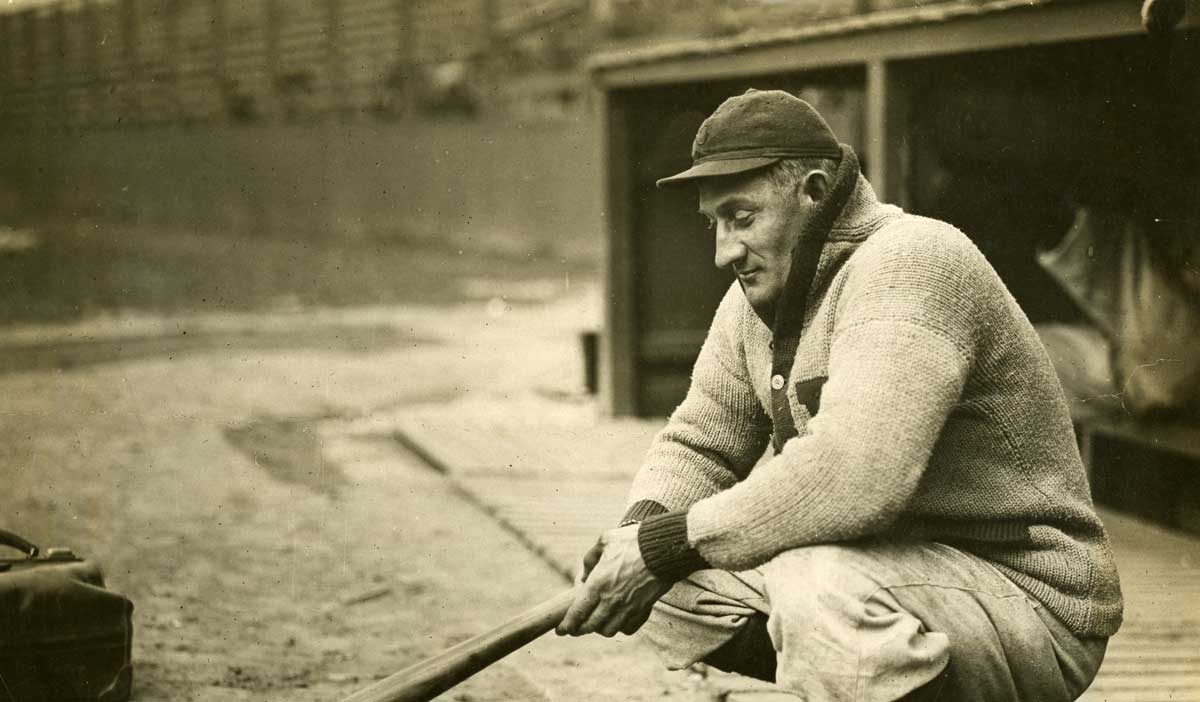
Pittsburgh Pirates’ great Honus Wagner was known for his bat.  Not just figuratively–he led the National League in batting eight times and finished with a .328 career batting average–but for his actual baseball bat, the lumber he gripped in his hands.  He preferred a 33 inch bat weighing over 40 ounces, massive by today’s standards, with a thick handle and small knob.

Continue reading “Honus Wagner and Hillerich Baseball Bats”

Walter Johnson and his Fox Hounds

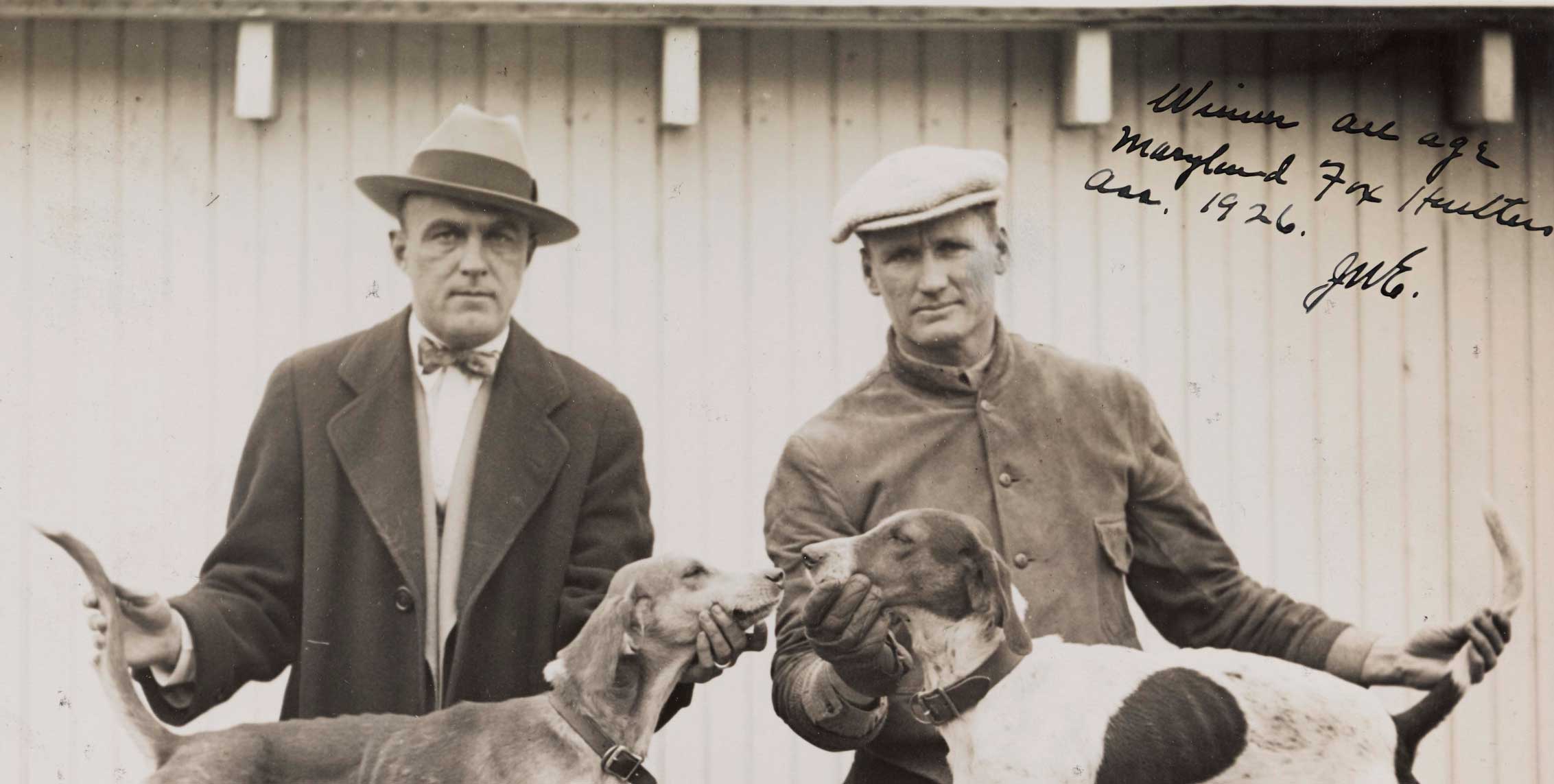
Even on its surface, it’s a compelling photograph. The inscription dates the image to 1926, but even without it, one could guess the era: the sepia finish, the rugged faces, the fedora on one man, the flat “newsboy” cap on the other. Even the weathered faces and wood-slat barn suggest an earlier age.

Continue reading “Walter Johnson and his Fox Hounds”

Jackie Robinson Scrapbook may include the most famous photograph ever taken at a minor league game

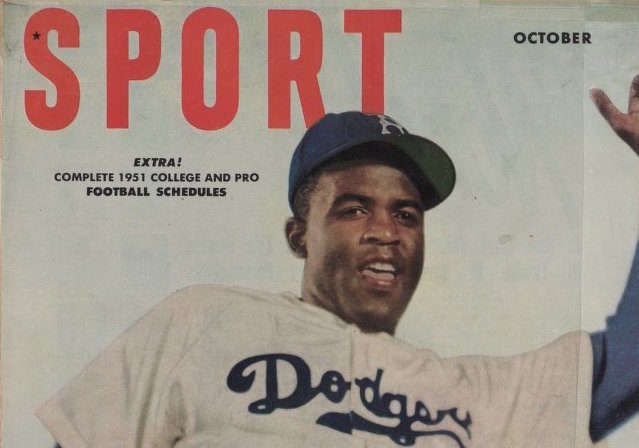
The Jackie Robinson Scrapbook, recently digitized by the National Baseball Hall of Fame and Museum and HistoryIT, is a collection of photographs, newspaper clippings, and even baseball cards compiled by a fan, Jack Donovan, during Robinson’s career.  Among the many illustrations is a photograph that is perhaps the most famous photos ever from a minor league game.

Continue reading “Jackie Robinson Scrapbook may include the most famous photograph ever taken at a minor league game”

Digital Imperative for Historical Collections

I read the April 2nd Washington Post article about the discovery of the missing patent documents for the Wright brothers’ “flying machine” with mixed emotions. As an historian, I am thrilled that determined archivists were able to track down what is universally regarded as a national treasure, missing – likely due to being misfiled – for more than thirty years. As a digital innovator, I see another example of celebrating “history saved” obfuscating the serious reality that our history is in danger, and I am frustrated.

Continue reading “Digital Imperative for Historical Collections”

Analog Practices in a Digital World

Our historical information is stuck in the past. For the most part, cultural heritage organizations are failing to connect the modern online population with our historical resources. I believe that the public needs to interact with evidence and stories from our past in order to build a thoughtful, informed society. And in order to interact with it, they need access to it – digital access. It’s not our technology – or lack thereof – that is relegating our meaningful evidence of the past to a small pool of elite researchers who are charged with finding and interpreting its meaning once they have located it in a remote physical archive, or even in a digital archive. At the root, the persisting problem is a cultural one or, perhaps more accurately put, a behavioral one. Our cultural heritage organizations are still utilizing analog practices, even within the digital world.

Continue reading “Analog Practices in a Digital World”

“Who?” is the question. “Everyone!” is the answer.

Powerful digital archives reach and influence new audiences and are the key to needed funding

The way we access information has fundamentally changed and this change demands a re-calibration on the part of those who house primary source historical materials. In the past ten years, Google has reshaped the public’s expectations around being able to find information and form conclusions based upon what they discover through simple online searches. The difficulty is, of course, that most of our primary source historical materials are not yet accessible online and those that are digitized often lack the robust, item-level tagging that would make them meaningfully searchable in this environment. This problem is exacerbated by a fixed mindset that would suggest that primary source materials in physical or digital form are still mainly for the scholarly researcher. Researchers have been the core focus of dedicated archivists and the institutions in which they work for lifetimes. But questioning who other than the researcher might be interested in accessing these materials opens a world of new possibilities.

Continue reading ““Who?” is the question. “Everyone!” is the answer.”

Kill the Finding Aid! Give the Public the Ability to Really Search our History

At HistoryIT we believe that the information in archives is of great interest to broad groups of the public, not just professional researchers.

Yes, scholars know how to navigate archives in various states. They understand how to read finding aids that provide cursory high level or container information. They have the time and training necessary to use the finding aid to navigate a sea of material. The public has no patience for this, or much familiarity with how to do so. But they have much to learn and understand from engaging with these historical materials, and they want to engage.

Continue reading “Kill the Finding Aid! Give the Public the Ability to Really Search our History”

Why is digitization so expensive?

At HistoryIT, we meet with a wide variety of organizations and institutions that are charged, either as their core mission or as one division of their entity, with caring for the historical records that tell the story of who they are, what they’ve accomplished, and what meaning is provided by their existence. We talk with them about how important these materials are and how, when they exist in a robust digital state, they will bring the parent organizations much greater value. We work with top-notch institutions and forward thinking organizations to build digital archives that are truly meaningful (by meaningful, we mean that are designed in such a way as to be easily searchable and sharable). In the course of this work, we daily encounter questions like:

Why is digitization so expensive?

Why can’t we just use our one or two scanners in the corner and a few interns or volunteers?

What’s wrong with the groups that will “digitize” our materials for ten cents a page?

Continue reading “Why is digitization so expensive?”